Serving Chicago & all 50 states Mon-Fri 9-6 CT

The R&D Credit Payroll Offset: How Pre-Revenue Startups Turn Research Into Cash
Pre-revenue startups can claim the R&D tax credit against payroll taxes — up to $500K a year — even with zero income tax. Here's how the Qualified Small Business offset works.
Tram Le, CPA
7/13/20265 min read
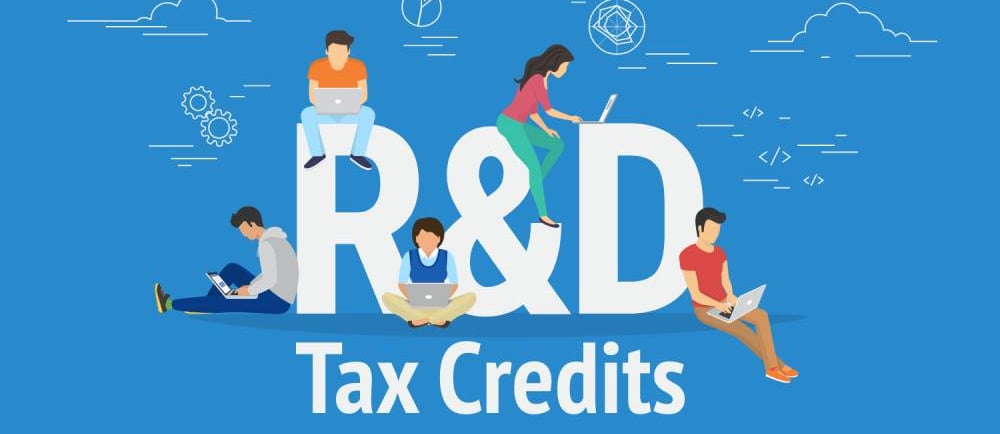
Most founders hear "tax credit" and tune out. We're not profitable — we don't owe income tax — so a credit does nothing for us. For most credits, that's true. The R&D credit's payroll tax offset is the exception, and it's one of the few government programs purpose-built for unprofitable startups. It lets a pre-revenue company convert engineering work it was already doing into real cash — up to $500,000 a year — by reducing the payroll taxes you actually remit, regardless of whether you ever show a profit.
This post is specifically about the offset mechanism — who qualifies, how the cash actually reaches you, and the deadlines that decide whether you get it. (If you want the broader primer on what qualifies as research and how the credit is calculated, see our main R&D credit guide — this one assumes you already know your team does qualifying work and focuses on turning that credit into money while you're pre-revenue.)
> Note: This is educational and general. The offset rules are specific and have changed in recent years. Confirm the current limits and procedure with your CPA before you file.
The core problem the offset solves
The R&D credit is normally applied against income tax. A startup burning cash with no taxable income has no income tax to offset — so historically the credit just sat as a carryforward, useless until profitability that might be years away (if ever).
The 2015 PATH Act fixed this for small companies by letting them apply the credit against payroll taxes instead. Payroll taxes are something every company with employees pays every quarter, profitable or not. By routing the credit there, Congress made it useful to exactly the companies that need cash most.
Who qualifies: the Qualified Small Business test
To use the payroll offset, your company must be a Qualified Small Business (QSB) for the year. Two conditions:
Gross receipts under $5 million in the current tax year, and
No gross receipts before the five-year window — i.e., your first dollar of revenue was within the last five tax years. A company that's had revenue for six-plus years can't use the offset, even if it's small.
This is deliberately aimed at young companies. A two-year-old startup with $800K of revenue (or zero) and a real engineering team is the textbook case. Note that interest income can count as gross receipts, which occasionally trips up well-funded startups sitting on a large raise — worth checking with your CPA.
How much cash you can get
The amount you can apply against payroll taxes was $250,000 per year originally. The Inflation Reduction Act doubled it to $500,000 per year for tax years beginning after 2022. The mechanics of the increase:
The first $250,000 offsets the employer's share of Social Security (OASDI) tax.
The additional amount (up to another $250,000) offsets the employer's share of Medicare tax.
So a startup generating a large credit can shelter up to half a million dollars of payroll tax in a single year — and carry forward any excess to future quarters.
How the cash actually reaches you (the timeline)
This is the part founders find confusing, because the credit is claimed on one return but used on another. Here's the flow:
Calculate the credit and make the election on Form 6765, filed with your income tax return for the year. You must affirmatively elect the payroll offset on a timely-filed return (including extensions). Miss the election on the original return and you generally can't add it later for that year.
The elected amount flows to Form 8974, which you attach to your quarterly payroll tax return (Form 941).
The offset kicks in the quarter after you file the income tax return. File your return in, say, the first quarter, and you start reducing payroll taxes the following quarter.
It reduces real cash. Instead of remitting the full employer payroll tax to the IRS, you remit less — the difference stays in your bank account. If the credit exceeds a quarter's payroll tax, the remainder carries to the next quarter until used up.
The practical implication: the benefit is not instant. There's a lag between doing the research, filing the return, and seeing reduced payroll remittances. Plan your cash flow accordingly — but know that the money is real and recurring.
A simplified example
Say a pre-revenue startup spent $1,000,000 on qualifying U.S. engineering wages in 2025 and generates a federal R&D credit of roughly $70,000 (typical for a first-year claimant using the Alternative Simplified Credit). The company:
Has under $5M gross receipts and first had revenue within five years → QSB, qualifies.
Elects the payroll offset on its 2025 return, filed in early 2026.
Starting the next quarter, applies the ~$70,000 against its quarterly employer payroll taxes.
That's ~$70,000 of cash the company keeps instead of remitting to the IRS — funding roughly an extra engineer-month of runway, generated purely from work already done. Scale the payroll up and the offset scales with it, to the $500K ceiling.
Don't forget the states
Several states have their own R&D credits, and a few offer their own refundable or transferable mechanisms that put cash in your hands even without state income tax. The federal offset is the headline, but a complete claim looks at the state layer too — sometimes adding a meaningful amount on top.
The mistakes that cost startups the offset
Not electing on a timely return. The payroll offset is an election, not automatic. It must be made on a timely-filed return (with extensions). Founders who file late, or whose preparer doesn't make the election, lose it for that year.
Assuming you're too small or too early. Pre-revenue is exactly who this is for. If you have W-2 engineers doing qualifying work, you likely qualify.
Aging out without realizing. The five-year revenue window closes. A company that delays claiming can find itself ineligible for the offset later — claim while you're in the window.
Weak documentation. The credit is audit-prone. Keep time allocations, project records, payroll, and contractor invoices contemporaneously.
Leaving prior years on the table. If you qualified in a prior open year and didn't claim, an amended return may still recover the credit (though the payroll-offset election generally requires the original timely return — your CPA can advise on the options).
The bottom line
The payroll tax offset is the rare tax provision that rewards being an early, unprofitable, R&D-heavy startup. If your team writes code or builds technology and your company is young and under $5M in receipts, you can likely turn that work into up to $500,000 of annual cash — but only if you elect it correctly and on time. The window doesn't stay open forever, so it's worth getting on the radar now.
---
Pre-revenue but spending real money on engineering? Le CPA Group helps young startups qualify for the payroll offset, make the election correctly, and time the cash. Get in touch for a quick eligibility check, or subscribe for more founder-focused tax strategy.
Get in touch
Contacts
312-544-9226
tram.le@letaxfirm.com