Serving Chicago & all 50 states Mon-Fri 9-6 CT

83(b) Elections & Founder Equity: What You Need to Know Before Taking a Salary
A founder's tactical guide to the 83(b) election, founder stock taxes, and restricted stock. Learn the 30-day deadline, how the election saves you money, and when to file.
Tram Le, CPA
7/20/20265 min read
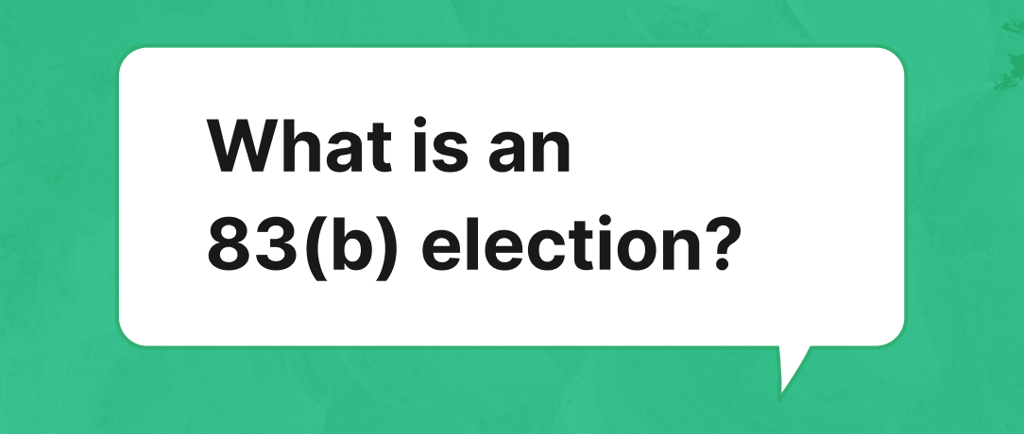
rely understand it, and many learn about it too late.
This is a tactical guide: what the election does, why the 30-day clock is unforgiving, when to file, and the related equity-tax traps founders hit when they start drawing a salary.
> Important: The 83(b) deadline is a hard legal deadline with no extensions. This article is educational. Confirm your specific situation with a CPA or tax attorney before the clock runs out — not after.
The problem: founder stock usually vests
When you incorporate and issue yourself founder shares, your investors, co-founders, and board almost always want that stock subject to vesting — typically a four-year schedule, often with a one-year cliff. Vesting protects the company: if a founder leaves after six months, they don't walk away with 25% of the company.
Mechanically, vesting means your shares are subject to a substantial risk of forfeiture until they vest. And that's where the tax problem begins.
Why unvested stock is a tax time bomb
Under the default rule (Internal Revenue Code Section 83), when stock is subject to forfeiture, you are taxed as it vests — and you're taxed on the value at the time it vests, not what it was worth when you got it.
Here's the trap. Imagine you found a company and your shares are essentially worthless at incorporation. Over four years, the company succeeds and the stock becomes valuable. Under the default rule:
Every time a tranche vests, the difference between the (now higher) fair market value and what you paid is ordinary income to you — taxed at the highest rates, and subject to payroll-type taxes.
You owe this tax even though you haven't sold anything and have no cash from the shares.
A founder whose company does well could face large tax bills, year after year, on paper gains.
This is the classic "phantom income" problem. Your equity went up, you owe tax, but you have no liquidity to pay it.
What the 83(b) election does
The 83(b) election lets you flip the timing. Instead of being taxed as the stock vests, you elect to be taxed now, on the full grant, at today's value.
For a founder filing at or near incorporation, today's value is usually tiny — often equal to what you paid, meaning $0 or near-$0 of taxable income at the moment of the election. By accepting tax on a near-zero value now, you avoid being taxed on all the future appreciation as it vests.
The benefits compound:
Little or no tax today — because the stock is worth almost nothing at founding.
No phantom income as you vest — vesting becomes a non-event for tax purposes.
The capital-gains clock starts immediately — your holding period begins at grant, not at vesting, which matters for long-term capital gains and for QSBS (Qualified Small Business Stock) treatment, where holding the stock more than five years can exclude a large portion of the gain from federal tax.
When you eventually sell, the gain is long-term capital gain (assuming you've held long enough) rather than ordinary income — a much lower rate.
The math on a successful outcome is stark: a founder who filed 83(b) might pay long-term capital-gains rates on the whole gain, while a founder who didn't pays ordinary-income rates on years of vesting plus capital gains on the rest. The 83(b) founder can keep dramatically more.
The 30-day rule — and why it's brutal
You must file the 83(b) election with the IRS within 30 days of the stock grant (the date you acquire the restricted stock). This deadline is:
Calendar days, not business days — weekends and holidays count.
Postmark-based — mail it so it's postmarked within the 30 days.
Not extendable — there is no grace period, no "reasonable cause" relief, no late-filing fix. Miss it by one day and the election is gone for that grant. Period.
This is why founders should think about 83(b) at incorporation, before equity gets complicated and certainly before the stock has appreciated.
How to file an 83(b) election
Prepare the statement. There's no official IRS form — it's a written statement containing your name, address, SSN, a description of the stock, the grant date, the fair market value, the amount you paid, and a declaration that you're making the election under Section 83(b).
Sign it.
Mail it to the IRS — to the office where you file your personal return — within 30 days. Use a method that gives you proof: certified mail with return receipt. Keep that receipt forever; it's your proof of timely filing.
Give a copy to your company.
Keep a copy with your records. (The requirement to attach a copy to your annual return was eliminated, but keep your proof regardless.)
The whole thing is one page and costs nothing but a stamp. The cost of getting it wrong is enormous.
"What about RSUs?" — a critical distinction
Founders often conflate restricted stock with restricted stock units (RSUs). They are taxed very differently:
Restricted stock (actual shares you own subject to vesting) — eligible for an 83(b) election. This is what most founders receive.
RSUs (a promise to deliver shares later) — not eligible for an 83(b) election. RSUs are taxed as ordinary income when they settle/deliver, full stop. There's no early-election option.
RSUs are far more common at later-stage companies and big tech employers than at founding. If you're a founder receiving actual restricted stock, the 83(b) is your tool. If you're joining as an employee receiving RSUs, plan for ordinary-income tax at settlement and the withholding that comes with it — and budget for the cash impact when they vest.
Where salary comes in
The title of this article mentions taking a salary, and it matters for two reasons:
Equity decisions should precede compensation decisions. Get your founder stock and 83(b) sorted at incorporation, when the value is lowest. Once the company raises money and the 409A valuation rises, the cost of any equity tax event goes up. Don't let a payroll/salary setup distract you from the 30-day equity clock.
Reasonable compensation rules. Once you start paying yourself, especially in an S-corp, the IRS expects "reasonable" salary subject to payroll tax. How you balance salary versus distributions versus equity is its own planning exercise — and it interacts with your equity story. Getting both right is where a CPA earns their fee.
Common mistakes to avoid
Waiting "until things settle down." The value only goes up. File early.
Assuming your lawyer filed it. Many founders assume someone else handled it. Confirm in writing, and keep the certified-mail receipt yourself.
Filing for RSUs. It doesn't apply; don't rely on it.
Losing the proof. If the IRS later questions it, your certified-mail receipt is the evidence. No receipt, no protection.
Ignoring state rules. Some states have their own wrinkles; coordinate federal and state.
The bottom line
The 83(b) election is a rare case where a single decision, made early, has an outsized financial payoff — and where doing nothing is itself a costly choice. If you've recently incorporated or are about to, treat the 30-day window as one of the most important deadlines of your founding year.
---
Recently incorporated or about to issue founder stock? Don't let the 30-day window slip. Le CPA Group helps founders file 83(b) elections correctly and plan equity and salary together. Contact us before the clock runs out, or subscribe for more founder tax tactics.
Get in touch
Contacts
312-544-9226
tram.le@letaxfirm.com